Boards
Christenson Crotalus Review: The All-Around San Diego Shortboard That Bridges HPSB and Alternative
Reswell6 min
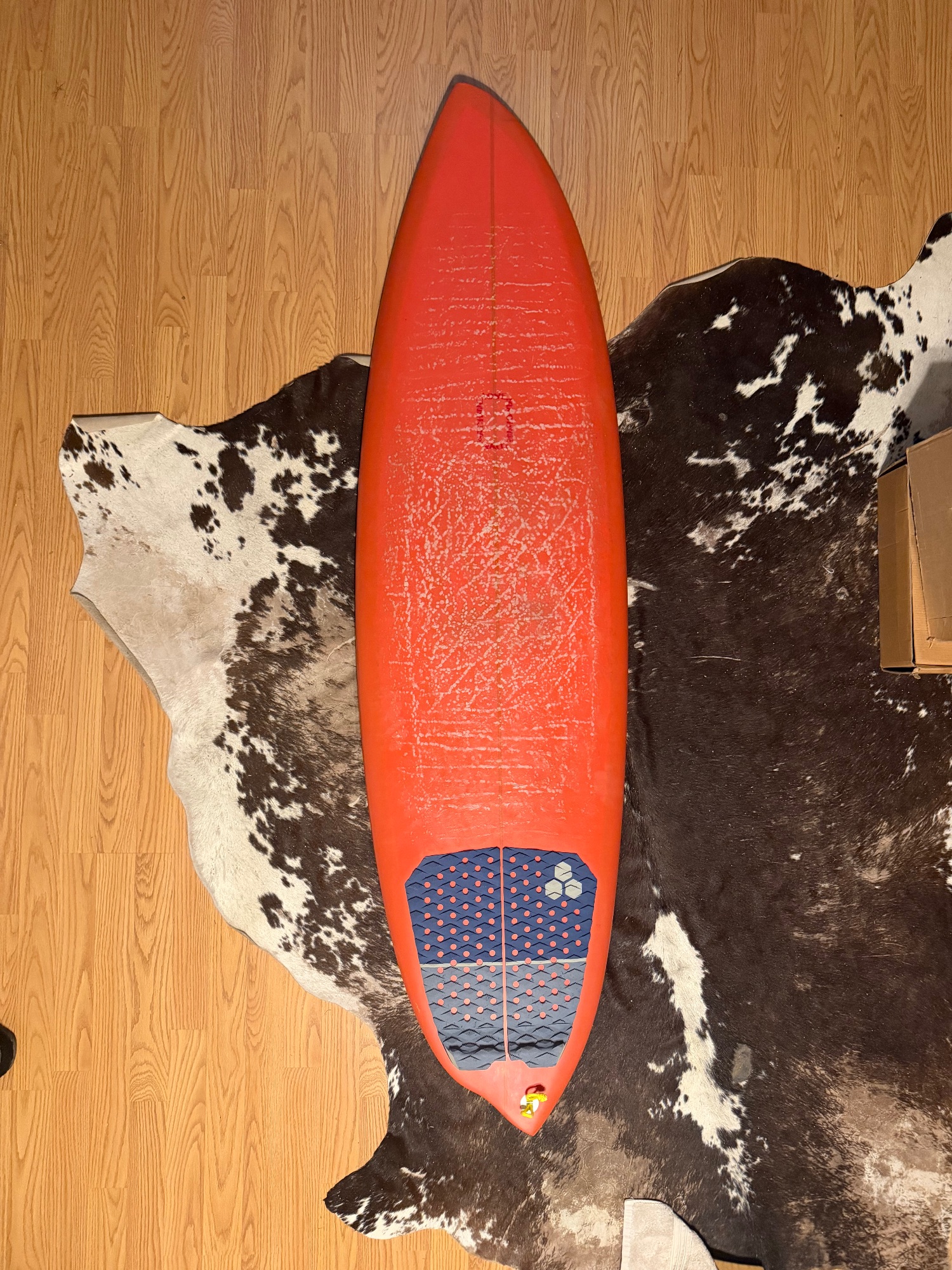
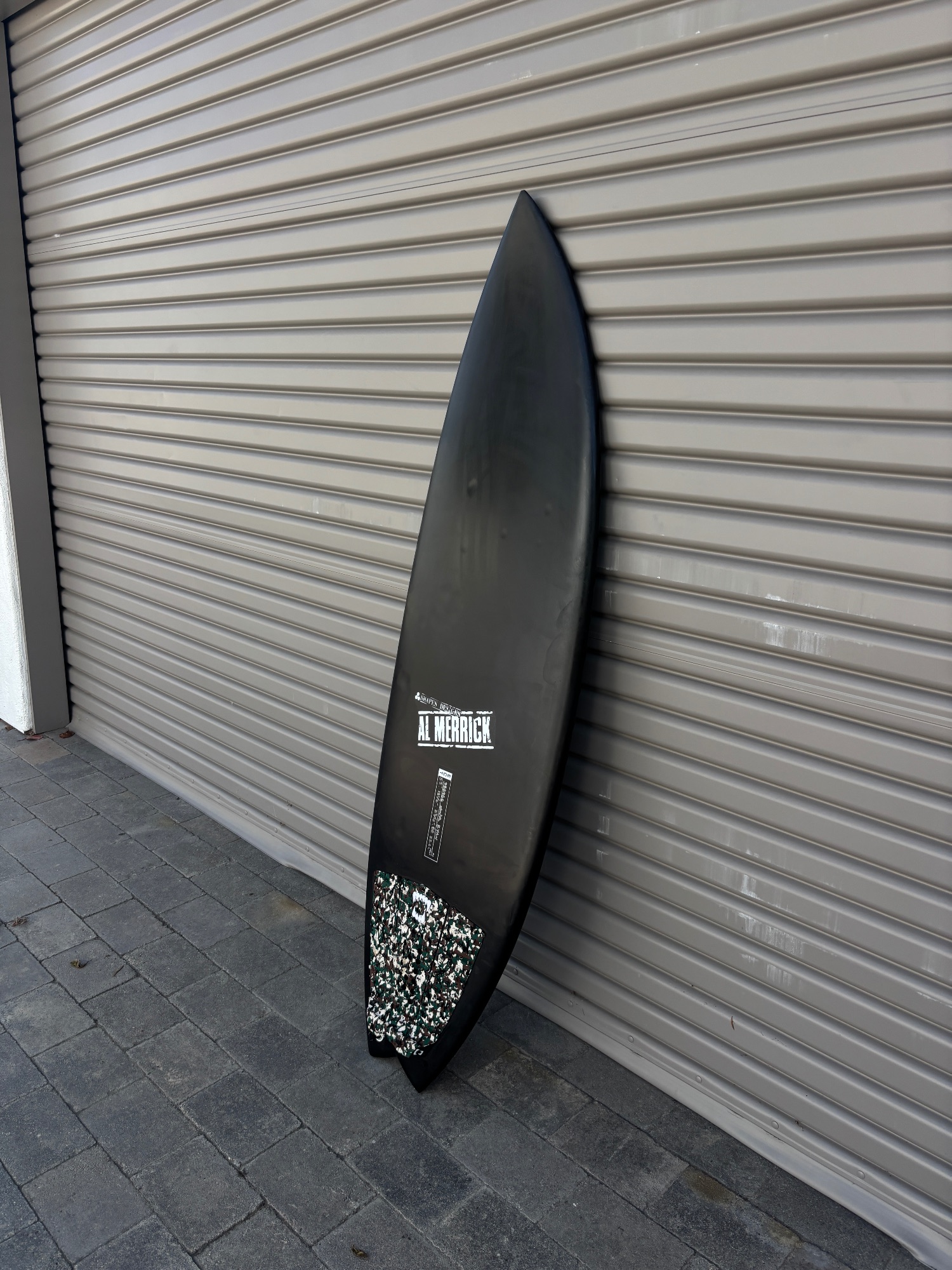
The Crotalus is Christenson's all-around San Diego shortboard — loose, skatey, and fast, with a wide tail that lets you push hard without skipping out. It works from 2 foot to 2 feet overhead, comes stock as a five-fin (team riders prefer it as a quad), and is available in PU, EPS, and XTR. It's the bridge between a high-performance shortboard and an alternative board.
Short answer: The Crotalus is Christenson's all-around San Diego shortboard — loose, skatey, and fast, with a wide tail that lets you push hard without skipping out. It works from 2 foot to 2 feet overhead, comes stock as a five-fin (team riders prefer it as a quad), and is available in PU, EPS, and XTR. It's the bridge between a high-performance shortboard and an alternative board.
The board most quivers are missing
There's a gap in most people's boards. On one side sits the high-performance shortboard — brilliant when the wave is good, punishing when it isn't, and demanding constant work from you to generate speed. On the other sits the alternative board — fast and fun and forgiving, but with a ceiling on how hard you can actually surf it.
The Crotalus lives in that gap deliberately. Christenson calls it the perfect bridge between a HPSB and an alternative — and that's the most useful sentence on the entire product page.
What is the Christenson Crotalus?
The Crotalus is described as your perfect all-around San Diego shortboard — which is a specific claim, because San Diego surf is a specific thing: often small, occasionally excellent, rarely consistent. A board that genuinely handles that range has to do several jobs.
The Crotalus is built to:
Fly — generate and hold speed without being pumped constantly
Hold a big carve — actual rail surfing, not just skate turns
Drive down the line to make any section — projection when the wave runs away from you
And it does it across 2 foot to 2 feet overhead, which is most of what most surfers actually get.
The name, by the way: Crotalus is the scientific term for rattlesnake. Fitting for a board meant to strike quickly.
How the Crotalus rides
Three words do the heavy lifting in Christenson's description: loose, skatey, and fast.
But the more important line is this one: it's a board that does not need to be worked hard.
That's the difference between a board you enjoy and a board you fight. High-performance shortboards ask you to generate everything — every bit of speed comes from your pumping. The Crotalus does more of that work for you, which means you arrive at the section with speed left over to actually do something with it.
The wide tail is the key
The design detail that defines the board is the tail. The maneuverability from the wide tail makes it easy to go full force and push it to the limit, without skipping out.
That's a specific and meaningful combination. Wide tails give you planing area and pivot — they're loose and fast and easy to turn. The usual trade-off is that they let go when you push too hard. The Crotalus's tail is shaped to give you the looseness and hold its line when you commit, so the ceiling isn't set by the board sliding out from under you.
Fin setup: five-fin stock, quad preferred
The Crotalus comes stock as a 5 fin, which gives you the full range of options — thruster for tight, controlled, pocket surfing, or quad for drive and speed.
Worth noting: team riders Niko Traubman and Shea Porter both prefer a quad setup for the drive. When the people who surf a board hardest all land on the same configuration, that's a genuine signal. If you're not sure where to start, start there.
Construction options: PU, EPS, and XTR
The Crotalus is available in three constructions, which is unusual and genuinely useful.
PU — classic feel, more flex, more damping. Best for surfers who want traditional feel and rail sensitivity.
EPS — lighter, livelier, more buoyant. Best for smaller and weaker waves, more pop and float.
XTR — stronger, more durable, high performance. Best for travel, longevity, and surfers hard on boards.
Same shape, three different personalities. If you already know what you like in a blank, you can order the Crotalus to match.
Crotalus size and volume chart
Stock dimensions below are listed as length, width, thickness, and volume.
5'4 — 18 5/8 × 2 7/16 — 25.3L 5'5 — 18 7/8 × 2 7/16 — 26.5L 5'6 — 19 3/16 × 2 1/2 — 27.7L 5'7 — 19 7/16 × 2 1/2 — 29.0L 5'8 — 19 3/4 × 2 9/16 — 30.3L 5'9 — 20 1/16 × 2 5/8 — 31.7L 5'10 — 20 5/16 × 2 5/8 — 33.1L 5'11 — 20 5/8 × 2 11/16 — 34.5L 6'1 — 21 3/16 × 2 3/4 — 37.5L 6'2 — 21 1/2 × 2 13/16 — 39.0L 6'3 — 20 15/16 × 2 11/16 — 36.0L
Sizes run 5'4 to 6'3, roughly 25L to 39L. Note that the 6'3 is drawn narrower than the 6'1 and 6'2 — a more traditional, drawn-out shape at the top of the range rather than simply a scaled-up version.
If your size isn't in stock, Christenson takes custom orders.
Who is the Crotalus for?
It's a great fit if you: - Want one board that covers most of your surfing year - Are tired of working hard for speed on a high-performance shortboard - Want alternative-board ease without the alternative-board ceiling - Surf small-to-average waves with occasional good days - Like the idea of tuning the board via fins and construction
Look elsewhere if you: - Only surf powerful, barreling, overhead reef — you want a dedicated step-up - Want a pure retro or fish experience — look at Christenson's twin-fin models such as the Lane Splitter - Are a complete beginner — start with more volume and more forgiveness
The verdict
The Crotalus is a rare thing: a board that's honest about what it's for. It isn't pretending to be a contest shortboard, and it isn't leaning on nostalgia. It's an all-rounder engineered for real conditions — loose and fast enough to make bad days fun, with enough hold and drive that good days don't expose it.
Add the five-fin flexibility, three construction options, and eleven sizes, and you have a shape you can dial precisely to your surfing.
For a lot of people, this is the one-board quiver.
Frequently asked questions
Fins, constructions, and whether this should replace your high-performance shortboard — the questions that come up before you buy.
What is the Christenson Crotalus best for?
All-around surfing from 2 foot to 2 feet overhead. It's designed as a San Diego all-rounder — loose and fast in small waves, with enough hold to carve and drive when the surf gets better.
Is the Crotalus a thruster or a quad?
It comes stock as a five-fin, so both work. Team riders Niko Traubman and Shea Porter prefer the quad setup for the extra drive.
What does "Crotalus" mean?
Crotalus is the scientific term for rattlesnake.
What constructions is the Crotalus available in?
PU, EPS, and XTR — traditional feel, lighter and livelier, and more durable respectively.
What sizes does the Crotalus come in?
Eleven sizes from 5'4 to 6'3, roughly 25.3L to 39.0L. Customs are available if your size isn't in stock.
Crotalus or a high-performance shortboard?
If you surf mostly average waves and want a board that doesn't need to be worked hard, the Crotalus. If you're surfing powerful, high-quality waves most sessions, a dedicated HPSB will suit you better. The Crotalus is explicitly the bridge between the two.
Ready to ride it?
Browse Christenson Crotalus boards on Reswell. Christenson Surfboards are hand-shaped in Carlsbad, California — browse in-stock Crotalus boards or order a custom in your dimensions.